March can traditionally be a tough month for fishing, or at least, catching fish. Water temperatures are low, sometimes being the lowest of the year. In fact the 2018 “Beast from the East” straddled February and March and saw severe winter conditions across the whole country, including rare snow in Cornwall. So whilst the daylight hours are increasing and the dawn chorus is coming to life, it can be a really hit and miss time of year for fishing. With the conditions changing from dawn to dusk and even within just a matter of hours (or minutes) your timing is everything. Get it right and you can enjoy some fantastic early season fishing, get it wrong and you’d think there wasn’t a fish for miles! With this experience I chose my time carefully during March. Whilst I love to get a line in the water, there are always jobs to be done and if the chances of catching a fish are low, it makes sense to get the jobs done so that when the fishing does improve, you’ve finished your list of things to do.
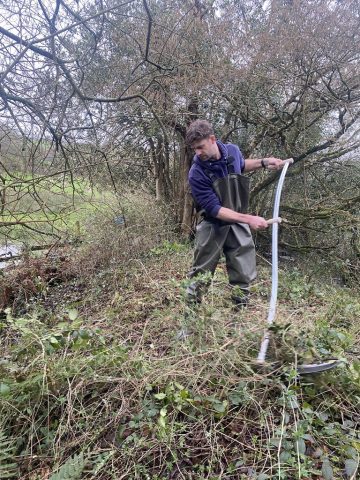
The first job which needs doing is work around the lakes. When the vegetation has died back, keeping otter fences clear is the top priority. Fences are not a nice thing to see around lakes but if you want any chance of keeping these apex predators away from your old fish, a fence is the only way to safeguard the future of any fishery. I’ve witnessed loads of otters in Cornwall and even had my own stock of fish devoured in just a few days. It’s absolutely heart breaking. You can’t blame the otters, they’re just doing what they do. The only proven way of protecting any stock of fish is to put a fence around the lake. But any fence is only as good as it’s weakest point, so keeping them clear of anything that could lead to a hole or mask a hole is essential. It’s not the most fun job in the world but it’s vital. This year I’ve gone all Ross Poldark and bought myself a scythe to clear the scrub. It’s a really efficient way of working, almost silent other than the satisfying swoosh of the cut and, it’s a nice gentle workout too. Old Poldark is safe in his job though, me chopping brambles in my waders ain’t getting any hearts racing!
The other job at this time of year is to pull on my walking boots and go looking for new spots to fish in the season ahead. Sometimes this involves visiting new fisheries but these are all pretty chartered territory and don’t really offer much excitement. The bit I enjoy the most is looking for new fishing spots around the coast. This season I’ve vowed to do more lure fishing for Bass and even Bream. It’s an area of the sport I’ve dabbled with loads of times. In fact, as a kid, lures were really all we fished with as it was the best way of catching mackerel. But i’ve not done much lure fishing in years and when I do, I always feel a bit lost. I think this is in part because it’s yet another branch of the sport that has become complicated. There used to be a handful of lures and they generally all did the same thing. You cast them out and you wound them in. You kind of used a shortish rod that wasn’t too heavy and that was good enough. These days the choices in all aspects of lure fishing are overwhelming, even for an experienced angler like me. There is no doubt there have been advances in lure fishing but ultimately its another part of the sport that’s been made overly complicated which I think creates another barrier to entry to the sport.
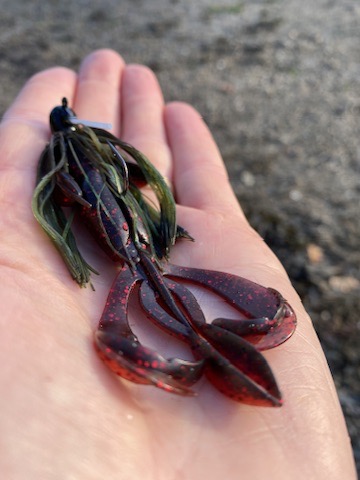
I did some research, spoke to some friends and had a chat with the excellent team in Lowen Chy tackle shop. This helped cut through the rubbish and refine the selection of kit and lures to just a handful of lures on affordable kit. So armed with my shiny new toys, the next bit was the most important bit, where to fish. For me finding the spots is a big part of the fun, I love the discovery. This used to be done with the help of good old fashioned Ordnance Survey maps but these days, the online maps with incredible satellite images are a huge help, but they are not the complete answer. The maps will help you find likely looking areas but the only way to truly find out is to get out there and check the spots for yourself. I love the solitude you can find when fishing and finding marks that are off the beaten track is just brilliant. You’ll never find a really quiet fishing spot wondering a short distance from the car. That’s where the walking boots come in, and sometimes a rope too! If you really want to leave the crowds behind you’re going to have to put some leg work in. I’ve lost count of the number of places I’ve got frustratingly close to only to find you just can’t make the last five meters down to the water’s edge. Only last year I snorkelled a small stretch of coast with a friend and found the biggest mullet I have seen for years. I was absolutely buzzing and was immediately plotting a way of reaching the spot. I’ve been back and found a way in but the tide makes it really hard to spend more than an hour there but that might be enough. The fish we saw were massive and there were several of them so I’ll be climbing in there this year when the conditions are right armed with my loaves of bread.
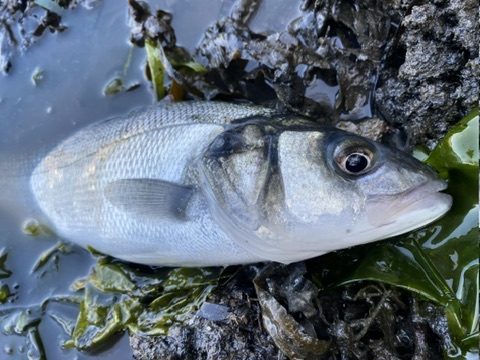
It was at one of the marks I discovered last year that I caught the first Bass of the season. There was nothing huge but it was great to see these spikey, silvery beauties once again. There are a few more spots in the area that I think will better in different states of tide. The only way to find out what the best conditions are, is to put in some hours and see what I can learn. I encourage you to get out there and make some discoveries for yourself, the fish you catch will make it feel like you’ve really earned it. Good luck!